The shape of your pool affects more than how it looks. It changes how much it costs, how well it fits your yard, and how you actually use it. Most homeowners spend a lot of time picking the right size and almost no time thinking about shape. That’s where a lot of pools go wrong.
The most common shapes of inground pools are rectangular, freeform, L-shaped, kidney, and geometric. Each one suits a different yard size, lifestyle, and budget. For most WNY homeowners, the best pool shape comes down to three things: how much space you’re working with, how you plan to use it, and what the overall cost looks like. A custom gunite pool can be built in any of these shapes, which means the decision is entirely yours to make.
What Are the Main Shapes of Inground Pools?
There are more options than most people realize. Here’s what’s actually available and what each one is good for.
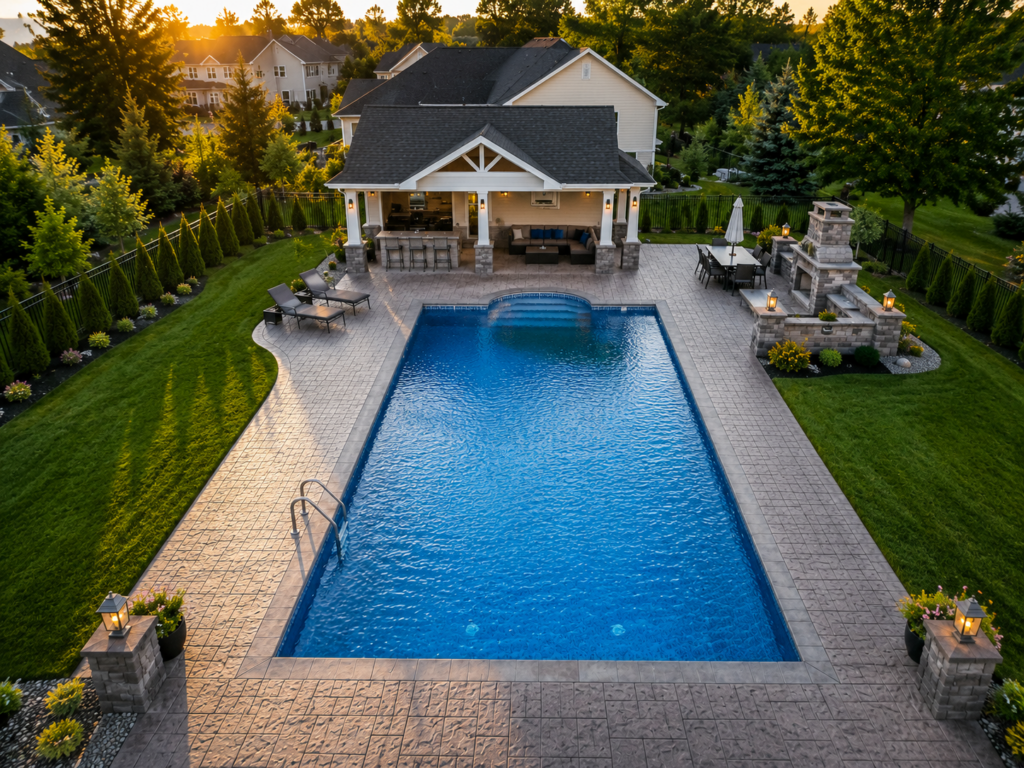
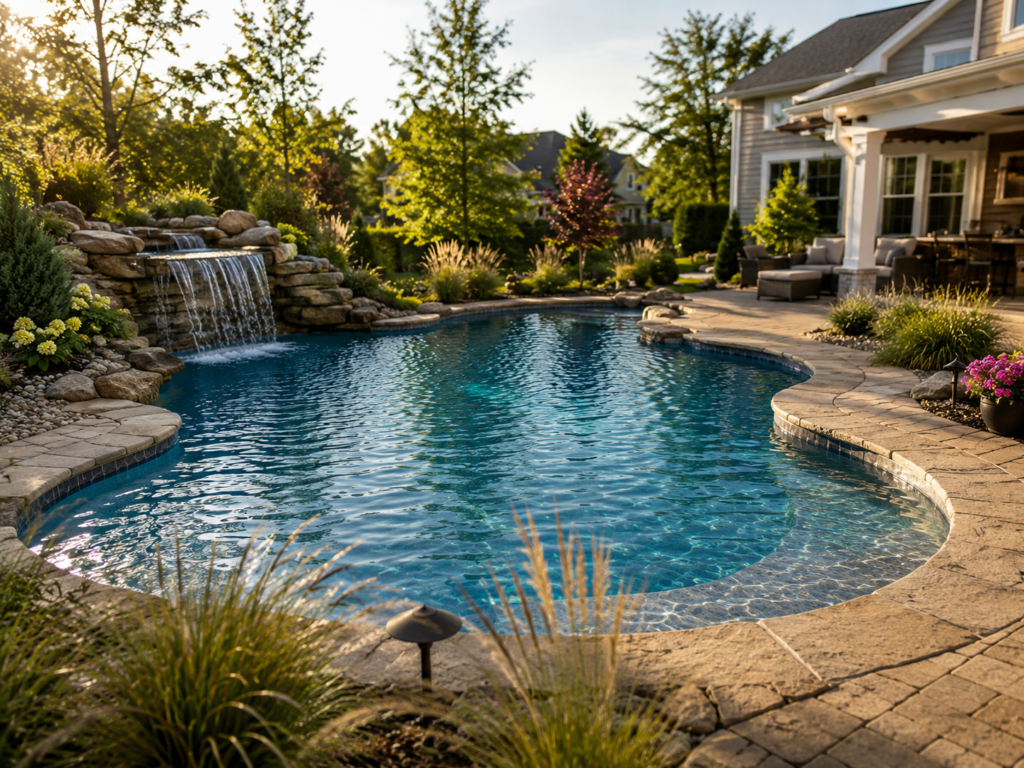
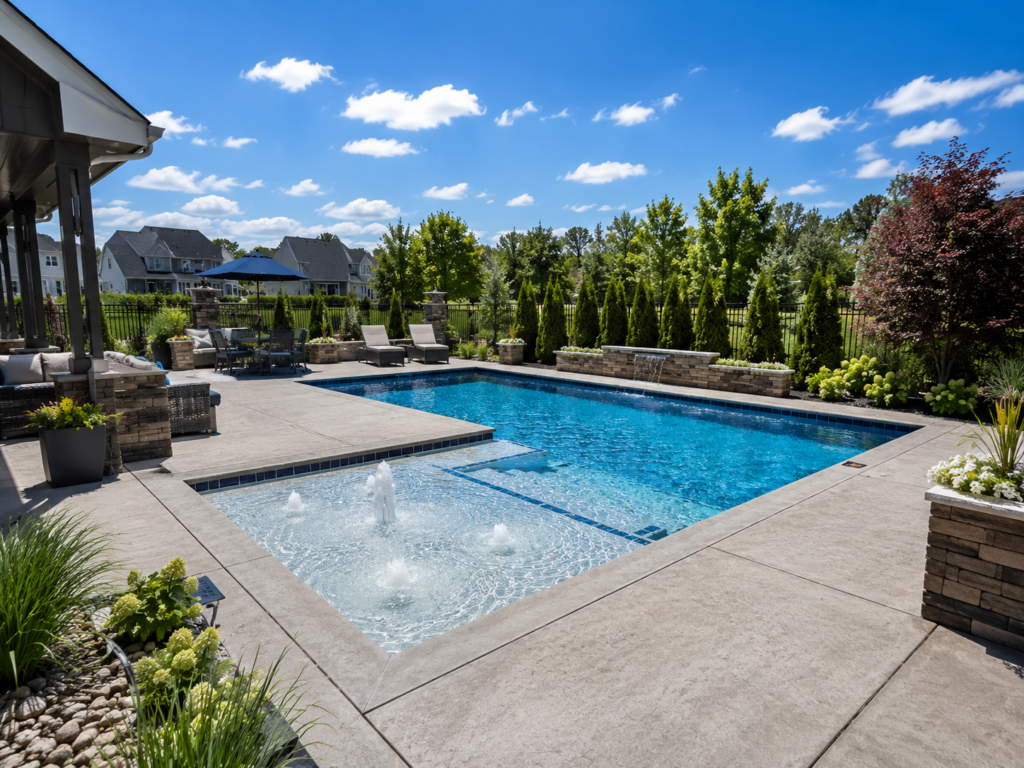
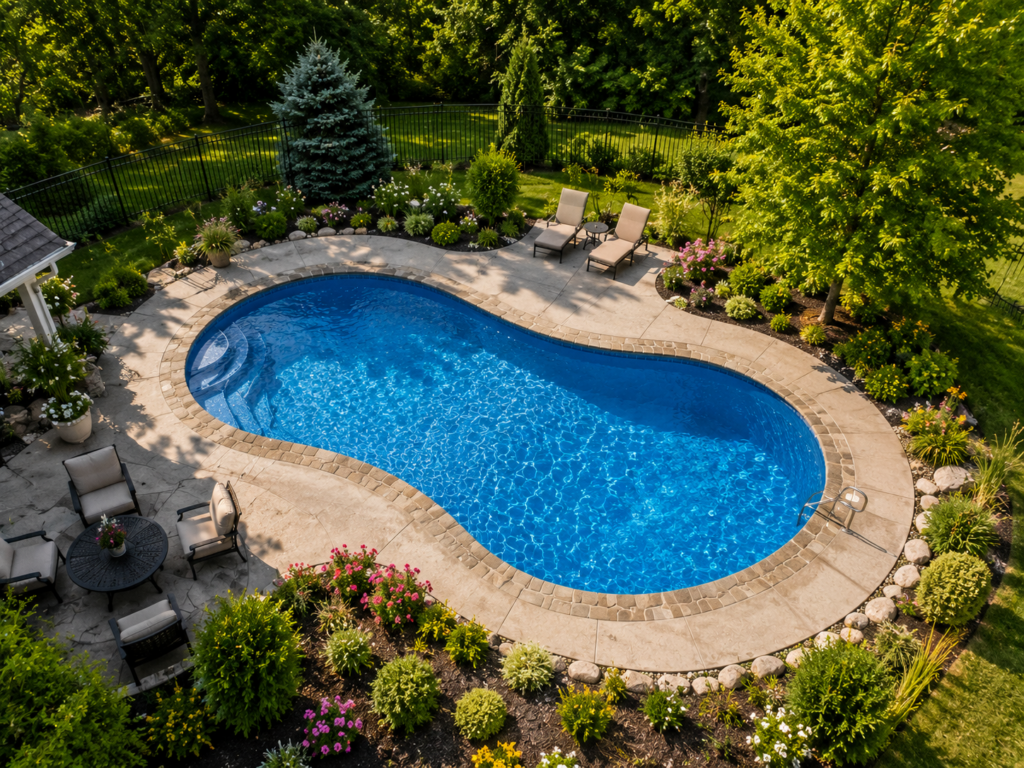
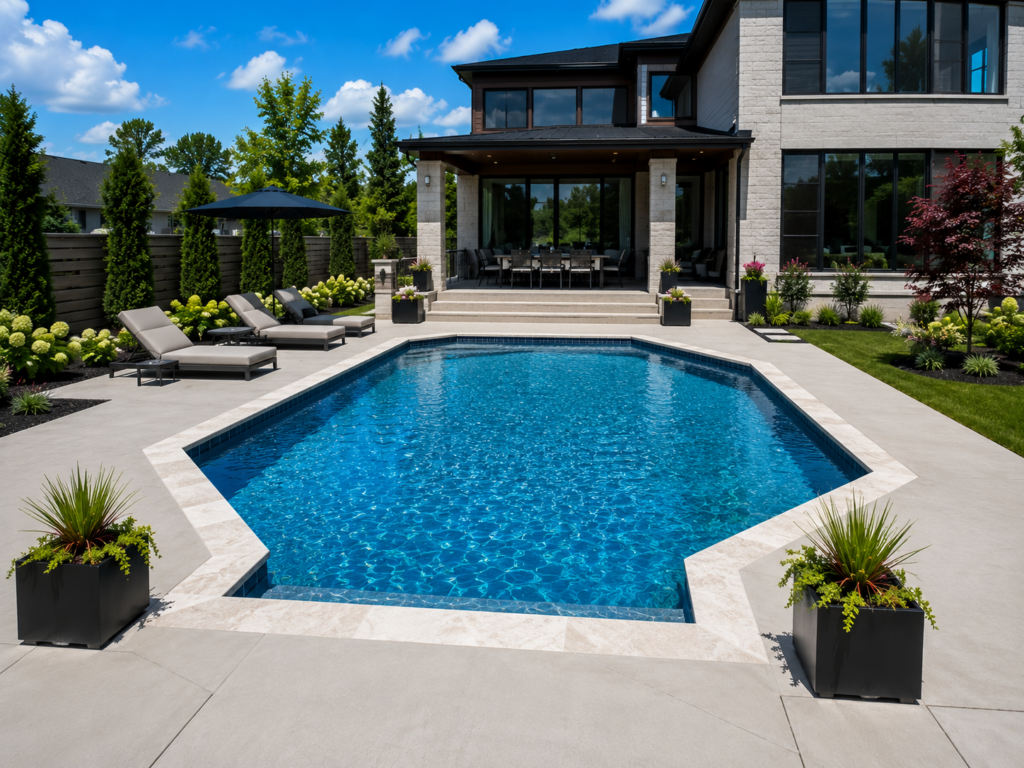
If you want to see how different shapes look in a real WNY backyard, browse our project portfolio. Every build there is a custom gunite pool, and the range of shapes is wide.
What Is the Best Pool Shape for a Small Backyard?
A rectangular or geometric pool. Both make the most of limited space because their straight lines run parallel to the yard boundaries. You waste less area to awkward corners or unusable deck space around curves.
Freeform pools are beautiful, but they spread out. The organic edges push deck space outward in different directions, which works well in a big yard and feels tight in a small one. If your yard is narrow, a long rectangular pool running the length of the yard gives you more swimming space per square foot than almost any other shape.
A plunge pool is worth considering too. These are compact by design, usually around 10 to 15 feet long, and built for smaller spaces. They’re not lap pools, but they work well for cooling off, relaxing, and adding a water feature to a yard that couldn’t fit a full-sized pool. Chameleon can build these as part of a custom construction project designed around your specific yard size.
Which Pool Shape Is the Most Cost-Effective to Build?
Rectangular pools are generally the least expensive to build. Straight lines are simpler to form and shoot with gunite, which means less labor time on the job. The geometry is predictable and contractors know exactly what they’re working with from day one.
That said, there’s a nuance here. A freeform pool with a smaller total surface area than a rectangular pool can sometimes come in at a lower price. Gunite pools are priced partly based on square footage. A compact freeform design with curves that reduce the total water volume can cost less than a full-size rectangle. It depends on the specific dimensions, not just the shape category.
What adds cost is complexity. Tight curves, unusual angles, and multi-level designs all take more time to build. So the most cost-effective shape is whatever shape keeps the construction simple and the surface area reasonable for your budget.
Our cost expectations page breaks down the main factors that affect what a custom gunite pool costs in WNY, including size, features, and design options. Worth reading before you commit to a shape.
How Do You Match a Pool Shape to Your Backyard?
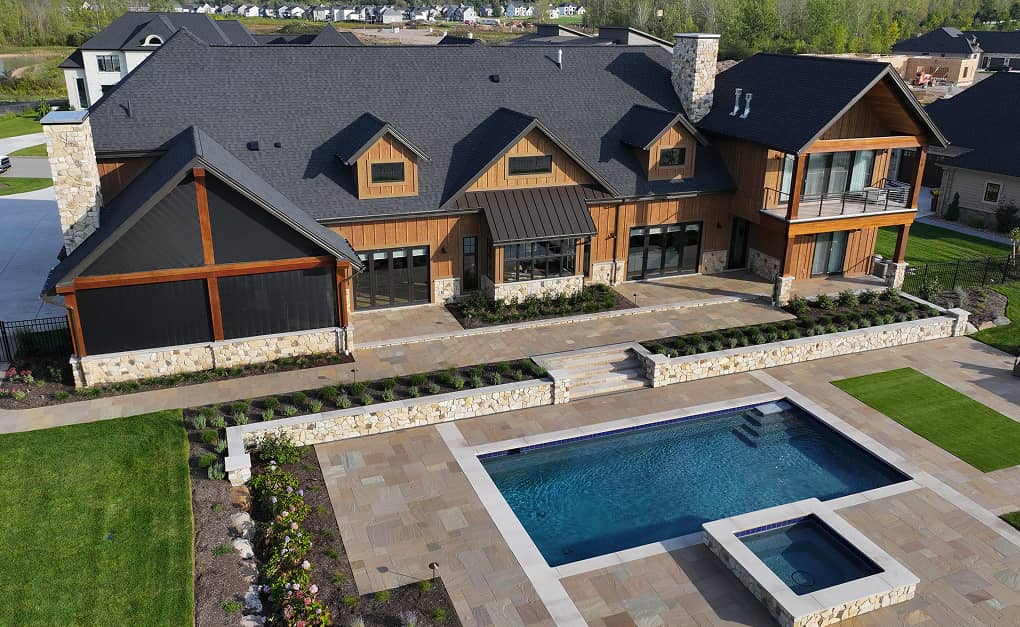
Look at your house first. A modern home with clean siding and sharp rooflines usually pairs better with a rectangular or geometric pool. A traditional or rustic home tends to work well with freeform or kidney shapes that feel warmer and less corporate.
Then look at your yard. If you have trees, garden beds, or a patio you want to keep, a freeform or L-shaped pool can work around those features. If your yard is a clean rectangle, a rectangular pool is the natural fit and the easiest to deck around.
Think about what you’ll do in the pool. Lap swimmers should stick to rectangular. Families with young kids benefit from L-shaped or freeform pools with a built-in shallow area. Homeowners who mostly want to float and entertain have the most flexibility and can choose based purely on aesthetics.
At Chameleon Pools, we walk through all of this during the design process. Every pool we build starts as a conversation about how you actually use your backyard. You can request a free consultation here and we’ll help you find the shape that makes sense for your space and your life.
Construction FAQs
What pool shape holds the most water?
Rectangular pools generally hold the most water relative to their footprint because there are no curves reducing the total volume. A 20×40 rectangle holds more water than a freeform pool of similar length because the edges don’t curve inward.
Do you handle the entire pool construction process?
Yes! From the initial consultation and design to excavation, installation, and final touches, we manage every step of the pool construction process, ensuring a seamless experience for you.
What is the most popular inground pool shape?
Rectangular is the most common overall. Freeform is the most popular among homeowners who want a resort-style look. In WNY, we build both regularly, and the right choice depends on the yard and the homeowner.
Can a gunite pool be built in any shape?
Yes. Gunite is sprayed concrete applied over a steel frame, which means it can follow almost any shape. This is one of the main reasons gunite is the preferred material for custom pool builds. Fiberglass pools come in preset shapes chosen from a manufacturer’s catalog. Gunite pools are built to your design from scratch.
Does pool shape affect resale value?
Shape matters less than overall quality and condition. A well-built freeform pool in good condition adds value. A poorly maintained rectangular pool in the wrong yard doesn’t. The National Association of Realtors estimates homeowners typically recoup 50 to 70 percent of a pool’s cost at resale, regardless of shape.