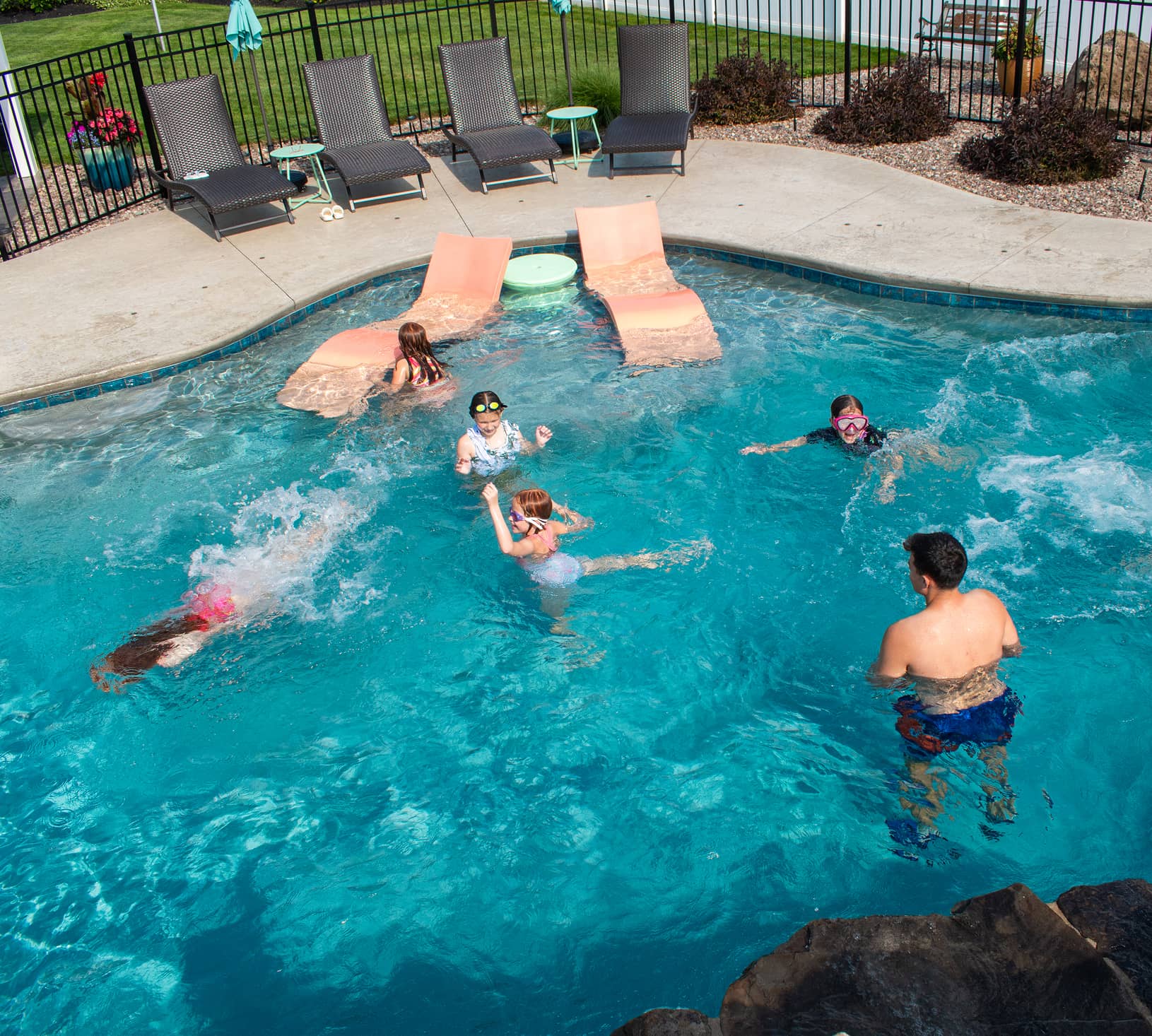
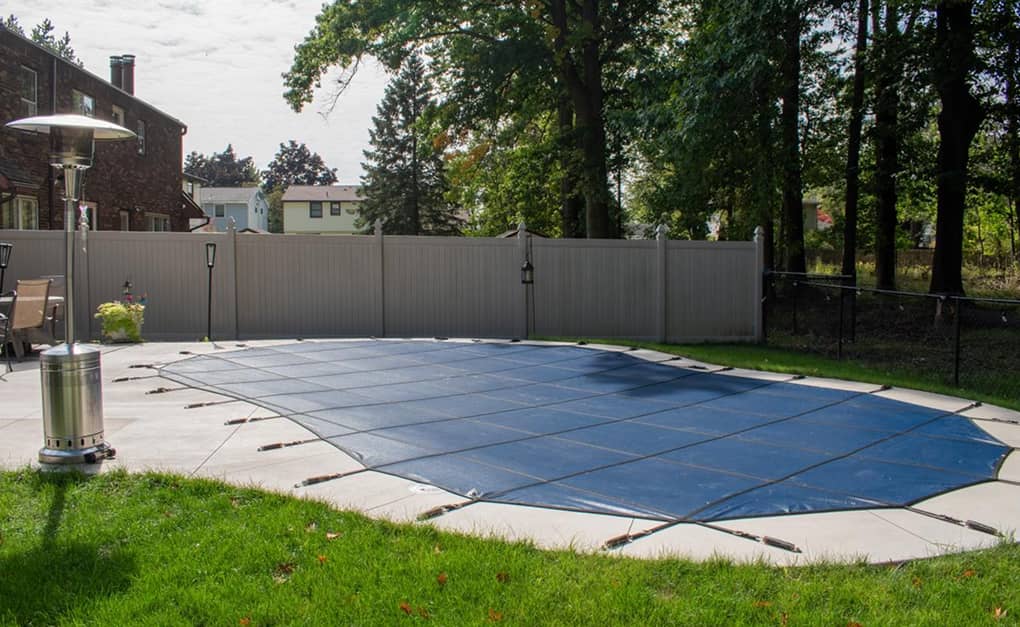
A pool doesn’t take care of itself just because the water looks fine today. Western New York winters are hard on plumbing, filters, and pool structures, and what you do in October decides how much work you’re doing next April. Seasonal pool maintenance isn’t complicated once you know the rhythm. It’s four distinct jobs, one per season, and skipping any of them costs you more later.
This guide covers what residential pool maintenance actually looks like across a full WNY year, including weekly pool maintenance tasks you can handle yourself and the bigger seasonal jobs worth calling in help for. If you’d rather skip straight to having someone else handle it, our pool maintenance services cover openings, closings, and everything in between.
What Is the Seasonal Maintenance Schedule for a Pool?
Four seasons, four jobs. Spring opening gets the pool running again after winter. Summer is weekly upkeep while the pool sees heavy use. Fall closing protects the pool before the freeze. Winter is mostly watching and waiting. Here’s what each one actually involves.
Spring: Opening the Pool
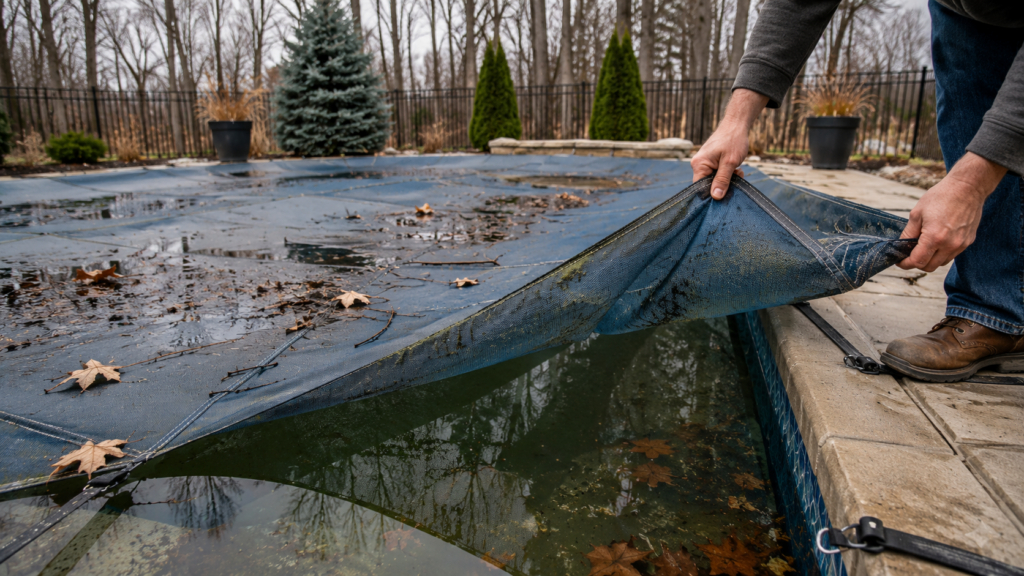
Pull the cover off carefully so debris doesn’t dump straight into the water. Hose it down, let it dry fully, and store it somewhere dry before it grows mildew. Once the pool is uncovered, skim and vacuum whatever settled over winter, then check the pump, filter, and heater for anything that didn’t survive the cold.
Test your water before you do anything else. pH should sit around 7.4 to 7.6, alkalinity between 80 and 120 ppm. Shock the pool to clear out anything that grew while it sat closed, then get the filtration system running. If you find cracks or damage during this inspection, deal with them now. A small crack in April is a small repair. The same crack in July, after a season of pool parties, is a bigger one.
If your pool needs more than a season refresh (resurfacing, a liner replacement, or an equipment upgrade) that’s the kind of work our pool renovation team handles.
Summer: Weekly Pool Maintenance
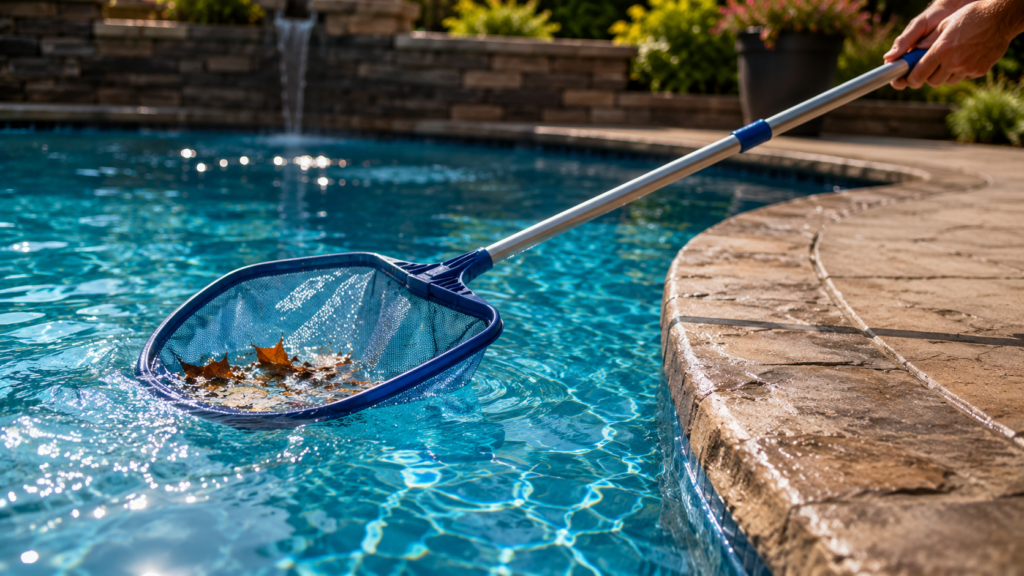
This is where routine matters more than any single task. Skim the surface a few times a week, more often if you’ve got trees nearby. Test water chemistry two to three times a week since heat and sun burn through chlorine fast. Brush the walls and steps to keep algae from getting a foothold, and vacuum weekly.
Keep free chlorine between 1 and 4 ppm. Shock the pool after a big party or a heavy rain, since both throw the chemistry off. Check your water level too. If it drops below the skimmer, the pump starts pulling air, and that’s an expensive way to find out your equipment doesn’t like that.
Most homeowners underestimate how much time this takes over a full WNY summer. If weekly maintenance isn’t something you want to own, we offer ongoing maintenance service that covers cleaning, chemical balancing, and equipment checks.
Fall: Closing the Pool
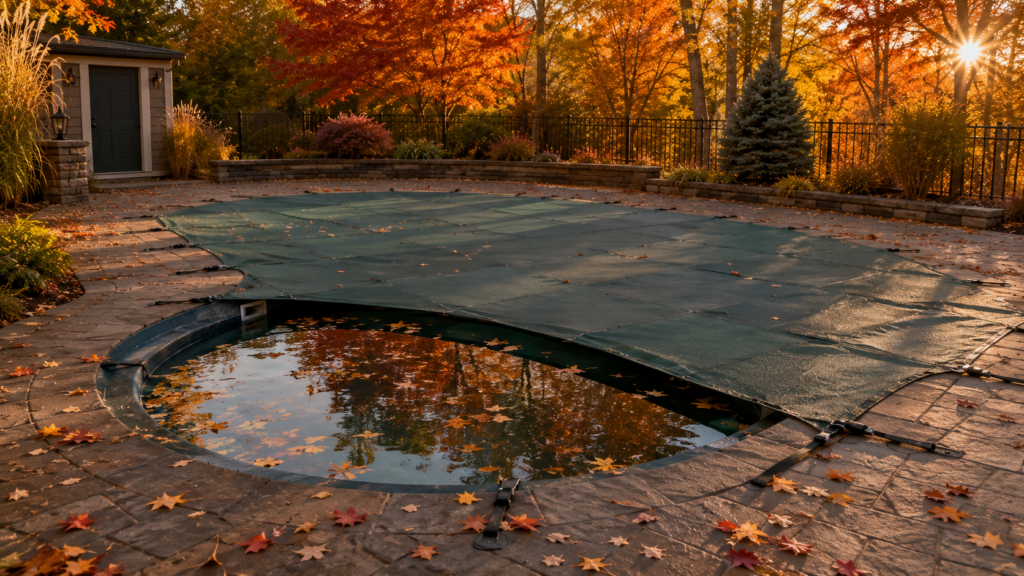
Fall is about getting ahead of the leaves before they win. Skim daily once trees start dropping, since decomposing leaves stain the pool surface and clog filters fast. Keep testing water weekly even as you use the pool less. It’s tempting to let chemistry slide once summer ends, but unbalanced water going into a winter closing is how you open to a green pool in spring.
This is also prep season, not just cleanup season. Order your winter cover and closing kit early rather than scrambling in late October. Start lowering the water level gradually as you approach your actual closing date, and do a final thorough filter clean before you drop run time. A dirty filter running short hours is an open invitation for algae.
Closing itself is detailed enough to earn its own section below, since it’s the single most consequential maintenance event of the year for a WNY pool
Winter: Watching and Waiting
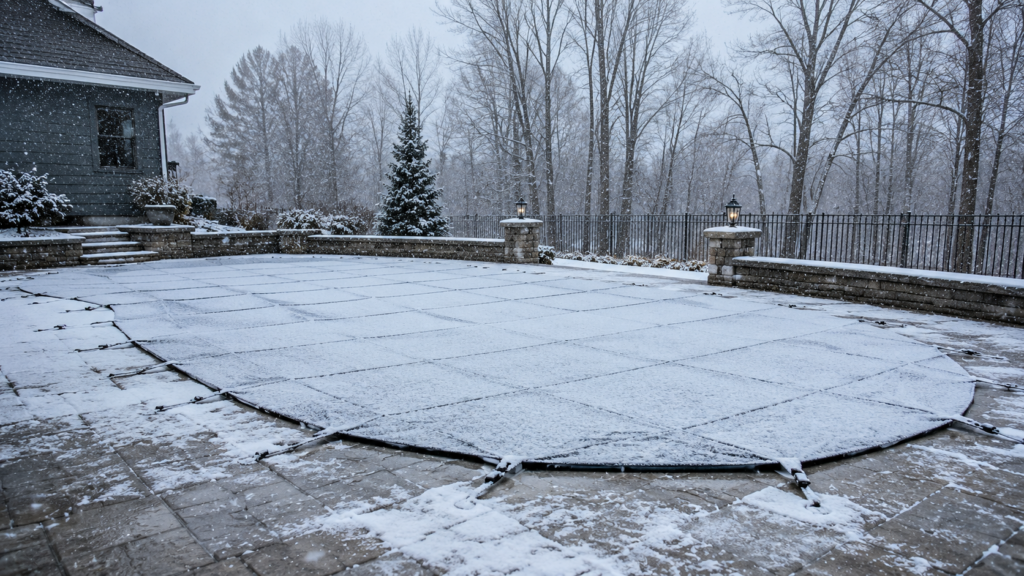
Once the pool is closed, winter maintenance is light but not nothing. Check the cover periodically, especially after heavy snow, since weight and debris buildup can stress or tear it. Make sure the area stays secure from kids, pets, or wildlife. On milder days, clear off anything that’s accumulated on the cover so it doesn’t sink into the water underneath.
How Do You Protect and Maintain a Pool During the Fall?
Fall closing is the single most important maintenance event of the year for a WNY pool. Get it wrong and you’re not looking at a green pool in spring. You’re looking at cracked plumbing, a damaged pump, or a heater that doesn’t turn back on.
Start with debris. Leaves left sitting in the water stain the pool surface and clog filters, so clear everything out before you touch the chemistry. Test and balance the water one final time (pH, alkalinity, sanitizer) so it’s stable while sitting untouched for months.
Lower the water level below the skimmer line. This is the step people skip, and it’s the one that causes the most damage. Water left in the skimmer or return lines freezes, expands, and cracks the plumbing. Drain the pump, filter, and heater completely for the same reason. A cracked line in November means jackhammering the deck in April.
Install winterizing plugs in the skimmer and return lines if you’re in a hard freeze zone, which covers most of WNY. Then put on a winter cover rated for the job, not a summer leaf cover. A proper winter cover keeps debris out and holds up against snow load.
This is also the point where you should flag anything you’ve noticed all season. A slow leak, a pump that sounds off, tile that’s starting to lift. Closing time is when you either fix it or let it sit under a cover for five months getting worse. We handle full pool closing service if you’d rather not risk missing a step.
Maintenance for an Above Ground Pool
The core routine for maintenance above ground pool setups follows the same seasonal logic: test chemistry weekly in summer, skim and vacuum regularly, and close it down properly before winter. The main difference is structural. Above ground pools have less rigid walls and simpler plumbing, so freeze damage tends to hit the pump and filter lines rather than the pool shell itself. Draining equipment fully before a freeze matters even more here, since there’s no concrete structure to fall back on if something cracks.
Chameleon Pools specializes in custom gunite inground construction and renovation, so if you’re building new rather than maintaining an existing above ground setup, our custom pool construction team can walk you through what a gunite build offers over an above ground alternative.
FAQs
How often should I test my pool water in summer?
Two to three times a week during peak season. Heat, sun, and heavy swimmer load all burn through chlorine faster than cooler months, so more frequent testing catches imbalances before they turn into algae or cloudy water.
What happens if I don’t winterize my pool properly?
Water left in the plumbing freezes and expands, which cracks pipes, pumps, and filters. That’s the most common and most expensive mistake WNY pool owners make. A rushed fall closing usually shows up as a repair bill in spring.
Can I do seasonal pool maintenance myself?
Yes, weekly tasks like skimming, brushing, and chemical testing are manageable for most owners. Spring opening and fall closing involve more risk (draining lines, winterizing equipment) so a lot of homeowners bring in professional help for those two specifically, even if they handle summer upkeep on their own.
How much does professional pool maintenance cost?
It depends on pool size, service frequency, and whether you need opening and closing included. Our cost expectations page outlines the main factors that affect pricing across our services.
Do you offer financing options?
Lorem ipsum dolor sit amet, consectetur adipiscing elit, sed do eiusmod tempor incididunt ut labore et dolore magna aliqua. Ut enim ad minim veniam, quis nostrud exercitation ullamco laboris nisi ut aliquip ex ea commodo consequat. Duis aute irure dolor in reprehenderit in voluptate velit esse cillum dolore eu fugiat nulla pariatur. Excepteur sint occaecat cupidatat non proident, sunt in culpa qui officia deserunt mollit anim id est laborum.